Delimitation Debate: Southern States Fear Loss of Political Representation
(Source – Indian Express, Section – Explained- Page No. – 14)
|
Topic: GS2 – Polity |
|
Context |
|
Analysis of the news:
What is Delimitation?
-
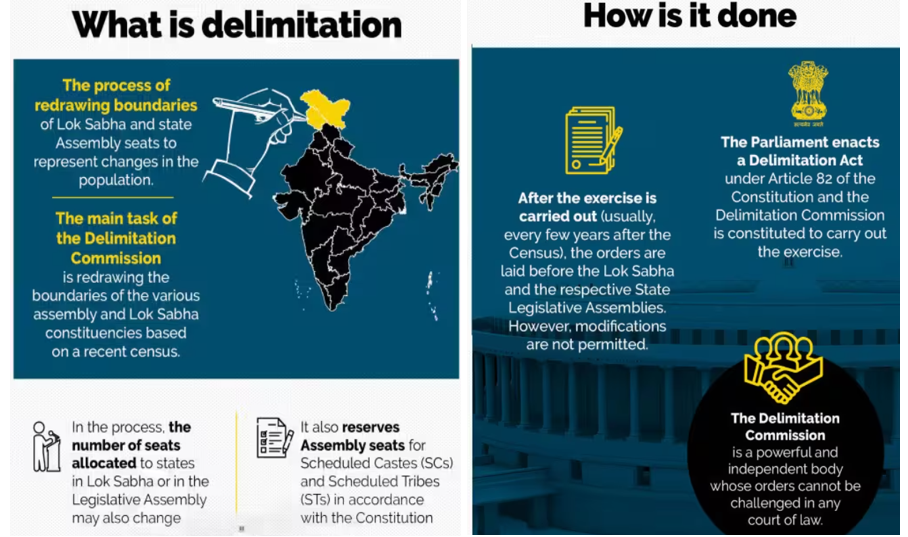
Delimitation is the constitutional process of redrawing electoral boundaries and reallocating seats in Parliament and State Assemblies based on the latest population data.
-
It ensures equitable representation, preventing significant disparities in constituency sizes.
-
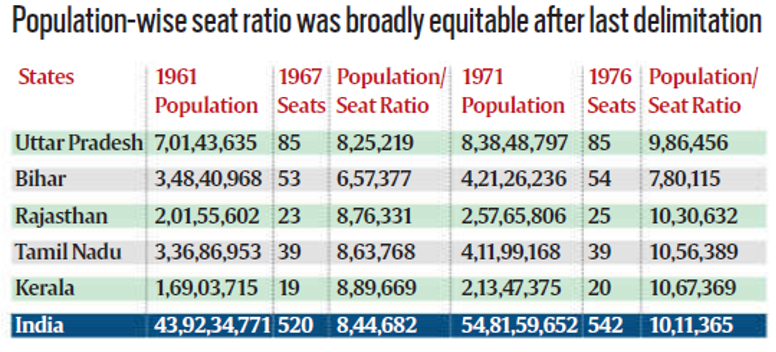
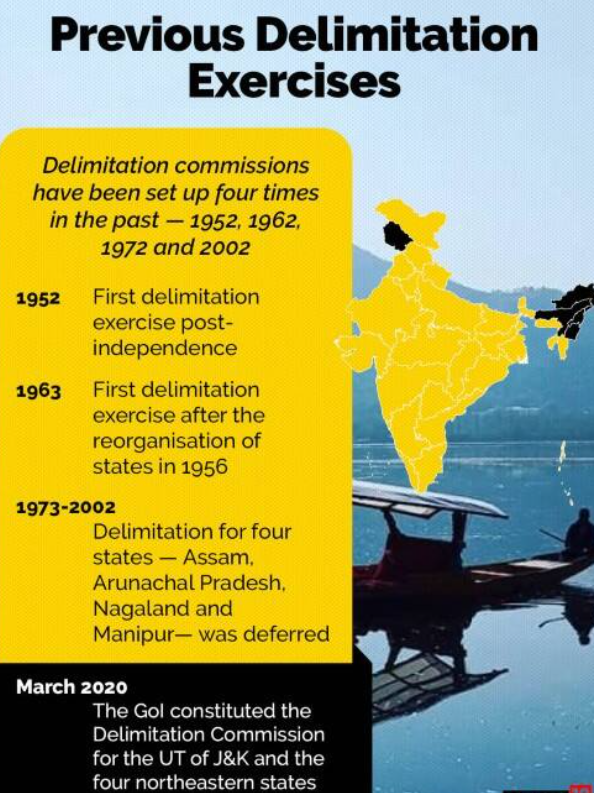
The last major delimitation occurred in 1976, with seat allocation frozen to encourage family planning efforts in high-growth states.
-
In 2001, only constituency boundaries were adjusted, but seat numbers remained unchanged.
Concerns of Southern States
-
Southern states like Tamil Nadu, Kerala, and Andhra Pradesh fear that delimitation based on the latest population figures would reduce their parliamentary representation.
-
Since these states have successfully controlled population growth, they worry about losing political influence to northern states, which have higher population growth rates.
-
Political leaders have openly voiced concerns that a population-based delimitation would unfairly advantage states like Uttar Pradesh and Bihar.
Data on Seat Redistribution
-
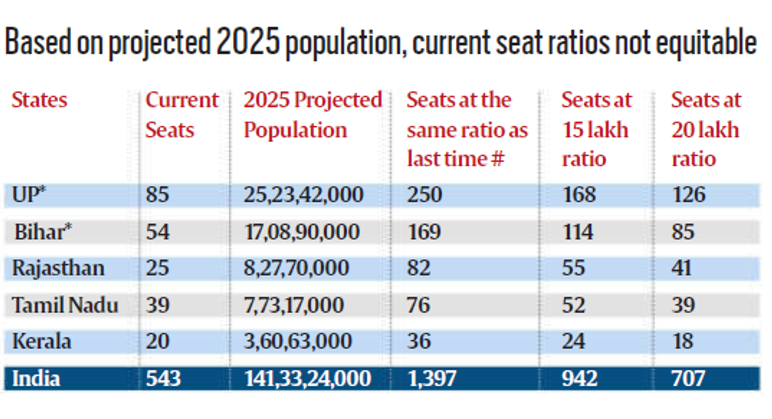
If the average population per constituency remains around 10.11 lakh (as in 1977), Lok Sabha strength could rise to nearly 1,400 seats, with UP and Bihar gaining significantly.
-
Even with a revised average of 20 lakh per constituency (707 seats) or 15 lakh (942 seats), northern states would still gain disproportionately.
-
Tamil Nadu and Kerala would see little or no increase, while UP and Bihar would gain dozens of additional seats.
Impact on Electoral Politics
-
A population-based delimitation could shift electoral dominance towards the Hindi heartland, potentially benefiting national parties like the BJP, which has a stronger presence in the North.
-
Regional parties in South India, as well as the Congress, which has relied heavily on South Indian support in recent elections, may find themselves at a disadvantage.
-
This could significantly alter political strategies and coalition dynamics ahead of future elections.
Conclusion
-
The delimitation debate highlights the complex balance between democratic representation and regional equity.
-
While ensuring proportional representation is essential, it must not come at the cost of politically and economically stable regions feeling disadvantaged.
-
A pragmatic approach that safeguards the interests of all states while upholding constitutional mandates is necessary for national unity and governance effectiveness.
|
PYQ: With reference to the Delimitation Commission consider the following statements: (2012)
Which of the statements given above is/are correct? (a) 1 only Ans: (c) |
|
Practice Question: Discuss the significance of the delimitation process in India. How can the government ensure a fair and balanced representation of states in Parliament while addressing concerns of regional disparities? (150 Words /10 marks) |